



On the Same Wavelength’: A Team of Emirati Women Engineers at ADNOC are Fueling Change from Fujairah
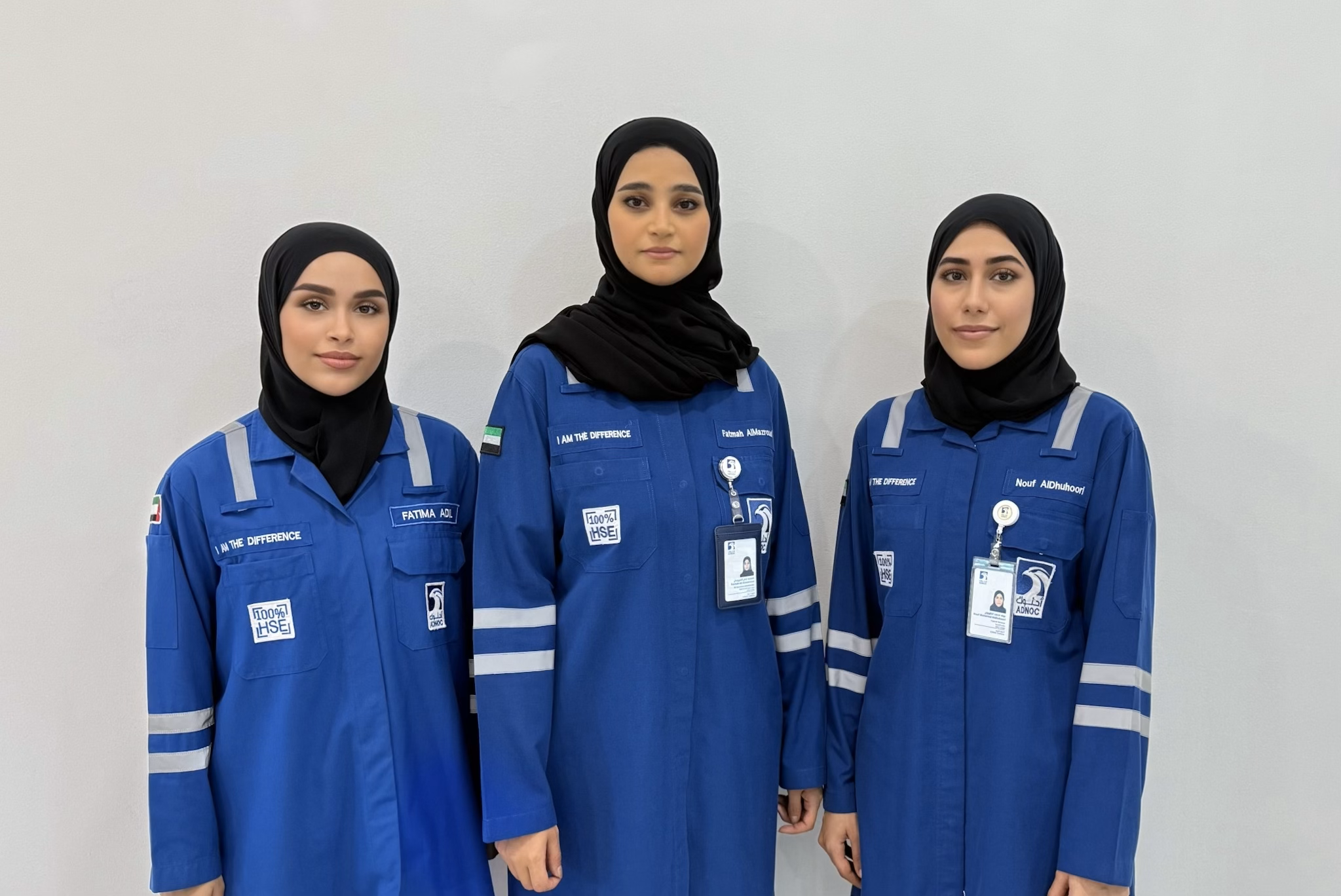
But the panel operators have a second important role beyond the control room. By thriving in roles traditionally dominated by men, they’re showing that inclusion in engineering isn’t just about fairness, but also a powerful driver of performance, innovation, and progress.
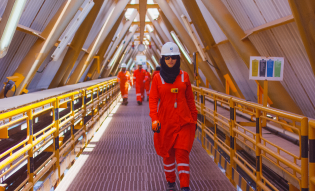
“Working with other women in this team has created unique synergies,” says Nouf, who monitors and controls complex plant operations around the clock. “We don’t just collaborate, we anticipate each other’s thinking. That instinctive connection makes problem-solving faster, smoother, and more intuitive.”
As the world marks International Women in Engineering Day today, June 23, under the theme #TogetherWeEngineer, the stories of Nouf, Fatima, and Fatmah, all just 26, reflect a broader transformation underway across ADNOC. Women are not only becoming more visible in technical roles, they’re helping redefine how engineering teams operate, innovate, and collaborate.
“As women, we sometimes approach problems differently,” explains Fatima, an operations engineer originally from Kalba in Sharjah. “That brings multiple perspectives to the table. That’s the real power of inclusion, it doesn’t just create better workplace dynamics, it leads to genuinely better engineering outcomes.”
She recounts a recent moment when that dynamic played out in real time.
“We were facing a shared documentation issue in our section, something that could have delayed operations,” she says. “But without even needing to explain much, Nouf and Fatmah were already thinking along the same lines. We each jumped in with ideas, and within minutes, we had a solution. That kind of instinctive teamwork only comes when you truly understand how your colleagues think.”
Platforms for Change
Whether contributing to major projects or resolving issues at the terminal, the women say their shared perspective fosters trust and open communication, helping to enable bold problem-solving and precise execution.
“When one of us encounters an issue, we immediately loop in the others,” says Fatmah. “It creates a continuous cycle of support and knowledge sharing that makes us all stronger engineers.”
The trio have benefitted from a commitment to inclusive leadership at ADNOC that is also opening doors beyond their daily technical roles. All three engineers have participated in high-profile site visits, represented their teams at leadership events, and taken on advocacy roles within company welfare committees.
“ADNOC has empowered me to grow beyond my core engineering responsibilities,” says Fatima. “I’ve developed communication skills through town halls, led welfare initiatives, and become an advocate for women in engineering. These aren’t just career milestones, they’re platforms for systemic change.”
Fatmah, a published author of children’s literature who transferred to Fujairah last year from Asab field in Abu Dhabi, initially worried her creative pursuits might conflict with her engineering career. Instead, she found encouragement.
“Leadership told me, ‘Whatever you’re passionate about, we’ll support you.’ That kind of support is transformative; it makes you want to excel in every aspect of your work.”
The success of engineers like Nouf, Fatima, and Fatmah is part of a broader transformation across ADNOC. More than 800 women now work at operational sites, and 21% of senior leadership roles are held by women. ADNOC has set an ambitious target of 25% female representation in technical roles by 2030.
“I’m proud to work for a company that doesn’t just welcome women, it creates a supportive culture for us to thrive,” says Nouf, who is from Fujairah. “We’re not here to improve statistics. We’re here because we’re excellent engineers, and ADNOC recognizes that our success drives everyone’s success.”
Engineered Empowerment
Asked what advice they’d give to aspiring young female engineers, their responses reflect both resilience and optimism.
“Surround yourself with supportive individuals, seek guidance, and dream big,” says Fatima. “Together, we can redefine what’s possible.”
Nouf adds: “Engineering opens doors to every industry. It’s not just about technical skills, it’s about developing problem-solving abilities that unlock endless possibilities.”
For Fatmah, the journey to her current role reflects this sense of boundless potential. As a child, she would gaze at the vast storage tanks of Fujairah, curious about what lay inside.
Today, she knows exactly what flows through them and she’s part of the team that ensures it all runs smoothly. She now works at a company that, in her words, “trusts women with critical roles in operations and believes in our ability to lead”.
“Now I work here,” Fatmah adds. “It’s a big opportunity, and it’s a dream come true.”