


Weaponizing Hormuz is Economic Terrorism Against Every Nation: Dr Sultan Al Jaber
At CERAWeek, Dr. Al Jaber says when Hormuz is squeezed, the pressure is felt everywhere, and the world pays, from factories to families
Iran has launched an illegal, erratic, unjustified and completely unprovoked attack on the UAE and our region
No country should be allowed to hold the global economy hostage
This is a security issue, not a supply issue. We cannot trade our way out of this crisis. Only way to stabilize markets is to open the Strait
Iran increasingly isolated as a record number of nations back UNSC Resolution 2817 and 22 nations issue joint statement condemning attacks on commercial vessels, civilian infrastructure and energy installations
Energy security is not a slogan it is the difference between lights on and lights off; stability in energy markets underpins stability in every market
At ADNOC, we took hits that no civilian enterprise should ever have to deal with
Our operations have been affected but we have full visibility of the situation and we are working through it methodically
Our word is our currency and when it matters, we step up and we show up
Global energy leaders invited to ADIPEC for a working session on the resilience of the global energy system
Al Jaber draws a line in the sand: It is time for the world to stand with nations that build prosperity, not those that fuel instability
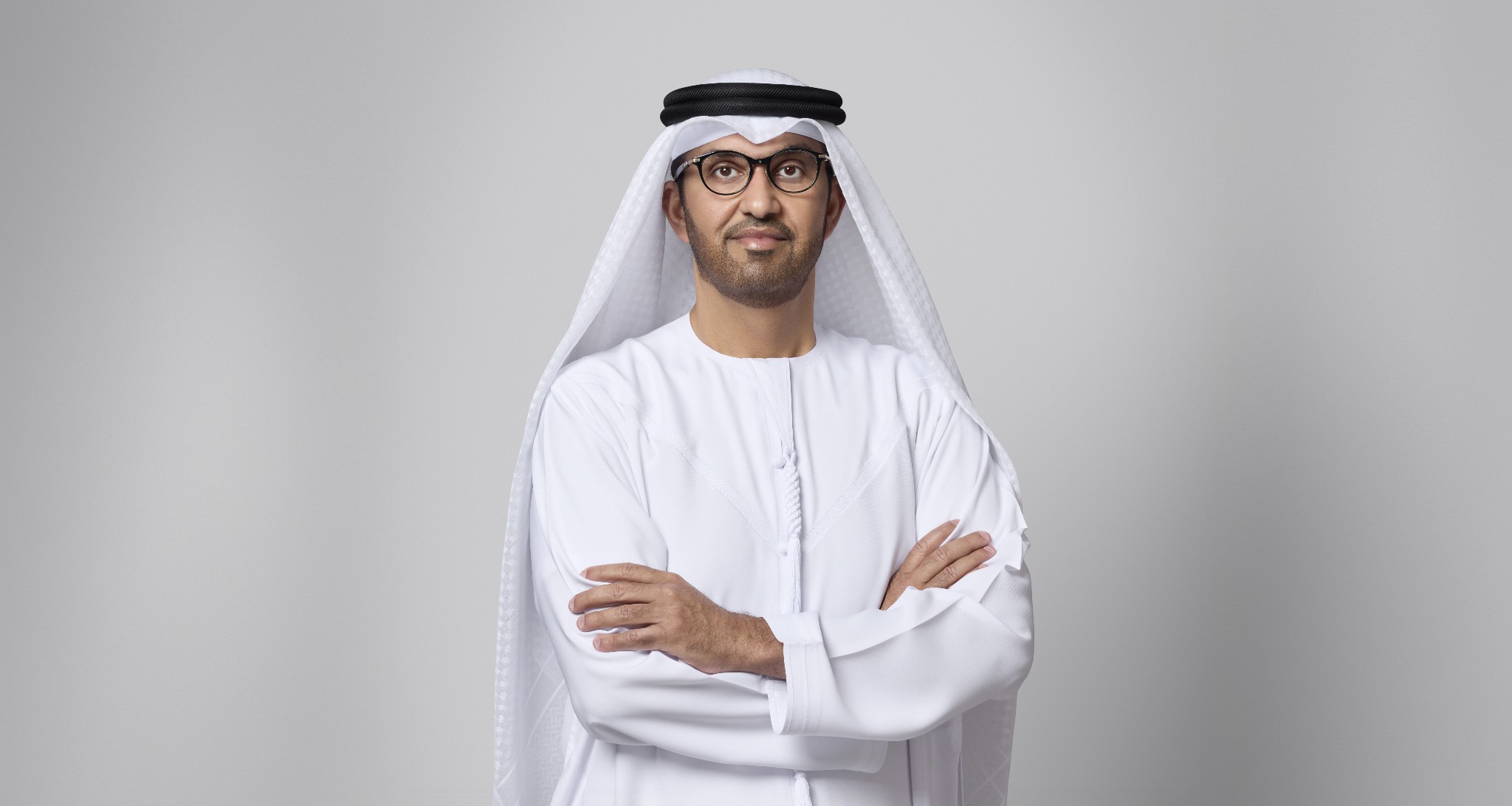
Houston, U.S. / Abu Dhabi, UAE – March 23, 2026: His Excellency Dr Sultan Ahmed Al Jaber, UAE Minister of Industry and Advanced Technology, ADNOC Managing Director and Group CEO, Chairman of Masdar and Executive Chairman of XRG, said today weaponizing the Strait of Hormuz is an act of economic terrorism with global impact far beyond energy markets.
Speaking at CERAWeek, taking place in Houston, Texas, Dr. Al Jaber said when the Strait of Hormuz is threatened, the human cost is exponential, and the consequences reach factories, farms and families around the world.
Dr. Al Jaber stated that “energy security is not just a slogan, it’s the difference between lights on and lights off.” He stressed that the world’s critical arteries must remain open and the Strait of Hormuz is one of those arteries.
“Twenty-one miles wide. Twenty million barrels a day. Nearly a fifth of the world’s oil and gas. Over a third of the world’s fertilizer. Almost a quarter of the world’s petrochemicals and significant amounts of industrial metals. In short, much of the oxygen of the global economy runs through a single throat. Yet, Iran believes that choking it is an acceptable strategy.
“When Hormuz is squeezed, the pressure is immediately felt around the world. In just three weeks, the price of oil has risen by 50 per cent. This is raising the cost of living for those who can least afford it and slowing economic growth everywhere. From factories, to farms, to families around the world, the human cost is mounting by the day.
“So let me be absolutely clear. Weaponizing the Strait of Hormuz is not an act of aggression against one nation. It is economic terrorism against every nation. And no country should be allowed to hold Hormuz hostage, not now, not ever. And while we appreciate all efforts to stabilize markets and reduce prices, this is not a supply issue. It is a security issue, and it has only one durable answer, keeping the Strait open. We cannot trade our way out of this crisis.
Dr. Al Jaber stressed the United Arab Emirates did not ask for conflict and had taken every possible step to prevent it. “But when the moment came, we were ready. Our defenses have been tested. Our resilience has been tested. Our character has been tested. And we withstood.
“At ADNOC, we took hits no civilian enterprise, let alone one focused on delivering energy to the world, should ever have to take. We are deploying extraordinary measures to keep our people safe and to make sure, as much as possible, every customer and every stakeholder gets what they need.
“We will continue to defend our nation and our way of life. In fact, this experience has only reinforced our model of pragmatic progress, rooted in realism not ideology, steady in its course, practical in its approach and relentlessly focused on results.”
Dr. Al Jaber said the UAE and ADNOC’s resilience was not a reaction, but the result of years of investment in infrastructure, preparation and long term planning and strategic partnerships. “For the UAE, partnership is not just something we do. It is who we are. Our commitments are concrete. Our word is our currency. And when it really matters, we step up and show up.
“That is why our relationship with all our partners, including the United States, endure. Through ADNOC, XRG and Masdar we have already invested more than $85 billion in U.S. energy assets, supporting power generation, advanced chemicals and jobs across 19 states,” Dr. Al Jaber said, adding the United States offers a unique combination of resource depth and investment stability.
“We are actively exploring opportunities across the whole value chain. And we are keen to expand our investments in hard infrastructure from storage to liquefaction to regasification plants.”
Turning to the future, Dr. Al Jaber said the crisis has revealed two very different visions. One seeks to spread instability. One seeks to promote prosperity. The UAE, he added, made its choice long ago.
“We built ADNOC into one of the most reliable energy companies on Earth not because disruption never reaches our borders, but because when it does, we stay the course. That’s why we have diversified how we produce energy. We have expanded the routes that connect supply to markets.
“We have integrated all sources of energy at scale. We have embedded technology and AI across our operations as the force multiplier that will define the next era of energy. And we have built a global network of partners who believe that energy security is a shared responsibility.”
Issuing an invitation for energy leaders to attend ADIPEC in November, Dr. Al Jaber said the events of recent weeks have drawn a clear line in the sand. “You can choose to be an architect of stability or a spectator to volatility. And if you believe that collaboration should prevail over conflict, then your place is with us. Stability does not happen on its own. It must be built deliberately and collectively.
“That is why I invite you to join us at ADIPEC this November, not just for another conference, but for a working session on the resilience of the global energy system.”
Taking place from March 23-27, CERAWeek is convening the energy industry’s foremost thought leaders. ADIPEC will take place from November 2-5, 2026, at the ADNEC Centre, Abu Dhabi.
# # #